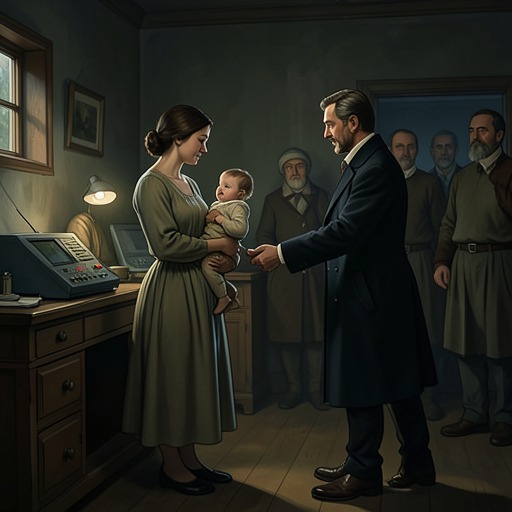
Gualtieri reveals the truth about Griselda’s trials
The DecameronGualtieri reveals the truth about Griselda’s trials in a public scene that transforms an apparent repudiation into a family reunion. After making Griselda prepare the celebration for a supposed new marriage, he reveals that the girl presented as his bride is their daughter and the boy beside her their son, both alive and returned to their mother. The recognition ends the ordeal, but it does not erase its cost: the company celebrates the reunion while judging Gualtieri’s tests excessively harsh and Griselda’s endurance extraordinary.
The staged wedding
The revelation is prepared through a deception that places Griselda once more in the house from which she has just been expelled. Gualtieri tells his people that he has chosen a daughter of the Counts of Panago as his new wife. He summons Griselda and asks her to arrange the rooms, prepare the food, invite the local ladies, and receive them as though she were still mistress of the household. When the festivities are over, he says, she may return to her father’s home. The request makes her perform domestic service for the celebration of her own replacement.
Griselda agrees without protest. Wearing her coarse homespun clothes, she sweeps and orders the chambers, hangs the coverings, prepares the food, and attends to every task needed for the feast. She invites the ladies and, when they arrive, welcomes them with the bearing of a high-born woman despite the poverty of her dress. Her composure is not presented as ignorance: Gualtieri knows her to be quick-witted, and the scene makes her continuing courtesy visible even under the humiliation he has arranged.
The children return
The supposed bride arrives at Saluzzo with her six-year-old brother, accompanied by Gualtieri’s kinsman from Bologna and a respectable company of gentlemen. Gualtieri had entrusted both children to that kinswoman’s care and directed that their identities be kept secret. The girl, now twelve, is described as exceptionally beautiful. The visitors and assembled guests believe that she is to marry Gualtieri; Griselda herself welcomes her as her future mistress and praises both children.
At table, the company admires the girl and declares that Gualtieri has made a good exchange. Griselda, unaware that the apparent bride is her daughter, joins in commending her and her young brother. That praise becomes the emotional hinge of the scene: she shows generosity toward the very children whose supposed loss had formed part of her suffering, while the reader and the guests wait for the meaning of their arrival to change.
Gualtieri’s disclosure
Seeing that the appearance of a new bride has not altered Griselda’s manner, Gualtieri calls her to him in front of everyone and asks what she thinks of the girl. Griselda answers that the young woman seems admirable and hopes she will be discreet as well as beautiful. She then asks Gualtieri not to inflict on this new wife the same anguish he had inflicted on his former one, reasoning that a younger woman, delicately brought up, might not endure it as she had.
Her answer prompts Gualtieri to end the deception. He says the time has come for her to reap the fruits of her patience and explains that he had tested and afflicted her to discover whether she would depart from his wishes. He also says he wanted to show others how to take and use a wife, and to secure his own lasting peace in marriage. In his account, her unbroken obedience has proved that he has obtained the comfort he sought. He then identifies the girl and boy as their own children—the children whom Griselda and many others had believed he had cruelly ordered killed—and declares himself her husband, devoted to her above all else.
Reunion and judgment
Gualtieri embraces and kisses Griselda. Weeping with joy, she embraces her daughter and son; the girl, who had been sitting stupefied by the disclosure, is at last undeceived. The women take Griselda into a chamber, remove her mean clothing, and dress her again in a magnificent gown of her own. She returns to the hall not as a servant attending another woman’s wedding, but as the children’s mother and the wife of the household’s lord. The feast resumes, and the celebration lasts for several days.
The guests’ judgment remains divided. They are delighted by the happy ending and consider Griselda the wisest of women, yet they regard the trials Gualtieri imposed as excessively harsh, even intolerable. That qualification keeps the reunion from making the preceding cruelty disappear: the public scene restores the family but also provides the audience with a measure of the ordeal. Gualtieri later marries his daughter nobly and lives long and happily with Griselda, whom he honors. He also removes Griselda’s father, Giannucolo, from his labor and places him in a station appropriate to a father-in-law, where he lives in honor and comfort until his death.
Narrative function
Told by Dioneo within the frame of the company’s storytelling, the disclosure is the decisive reversal of Griselda’s story. The apparent wedding is not a new marriage but a carefully staged recognition; the children’s return overturns the belief that they were killed, and the woman summoned to serve her replacement is restored to her place in the family. Gualtieri interprets the ordeal as a test that has now achieved its purpose, while the assembled company’s condemnation registers the distance between his explanation and the suffering the tests required. Griselda’s patient welcome of the children, before she knows who they are, supplies the scene’s clearest evidence of her character and makes the reunion both a reward and a judgment on the means by which Gualtieri claims to have earned it.